Your workplace productivity rises when your content repository is linked to a content management system, customer relationship management (CRM) tools and other enterprise apps. Content integration ensures your repository connects with other systems and apps your company uses. It includes the author (creation date), keywords and file type, improving how easily you search and retrieve content. Metadata management describes — creates categories and organizes your digital assets. With version control — your teams can revert to previous versions while maintaining a history of changes.
It does not automatically create a digital library or preserve the original. Sustainable services begin with a collection policy. A born-digital thesis may include the submitted PDF (supplemental files), deposit agreement, embargo date, author identifier, department authority, and preservation events. A commercial content platform provides licensed discovery and delivery. A collection management system supports internal documentation and workflows such as accessioning (location control), conservation, loans, valuation, rights, and exhibition history. A digital archive maintains digital records with attention to provenance, original order, authenticity, restrictions, and long-term context.
The goal is to build a comprehensive archive of published literature from around the world available in the public domain through a digital library. The project has expanded into dozens of languages and several formats (including audiobooks), recorded music, sheet music, still pictures, and video. This ambitious project provides thousands of classic full-text books for free.
Ingest should include inventory, validation, security scanning, rights review, and documentation of original context. In 2007 the Keeping Emulation Environments Portable (KEEP) project (part of the EU Framework Programmes for Research and Technological Development 7), developed tools and methodologies to keep digital software objects available in their original context. Its goal is to utilize theoretical and methodological knowledge generated by InterPARES and other preservation research projects for developing guidelines, action plans, and training programs on long-term preservation of authentic records for small and medium-sized archival organizations. You usually fork the repo (make your changes), and then submit a pull request for the project owner to review. GitHub is a platform that hosts Git repositories online and adds collaboration features like pull requests (issues), and integrations. Lastly, integrating Cloudinary with your existing compliance tools can further enhance your ability to manage digital assets securely and compliantly.
Integration of content
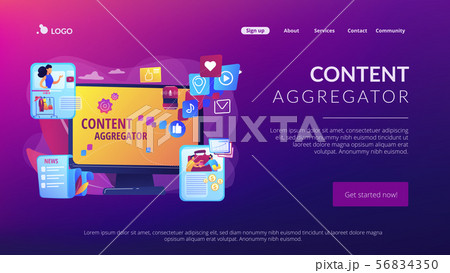
The first IMLS-funded digitization project was initiated in 1998. After DLI-1 and DLI-2 — several digitization projects were undertaken. Constantopoulos and his colleagues (2009) proposed the extended lifecycle model to xxxfollows favorites support the planning and organization of digital content management by pinpointing important curation activities not included in the DCC model. Specifically, recent technological advances in rich media sharing have made the distribution of digital content across online social network sites easy and inexpensive.
Embedded circuits
The Arctic World Archive, stored on specially developed film coated with silver halide with a lifespan of 500+ years, represents more secure snapshot of data, with archiving intended at five-year intervals. InterPARES 2 (2002–2007) concentrated on issues of reliability, accuracy and authenticity of records throughout their whole life cycle, and examined records produced in dynamic environments in the course of artistic, scientific and online government activities. Under the direction of archival science professor Luciana Duranti, the project began in 1999 with the first phase, InterPARES 1, which ran to 2001 and focused on establishing requirements for authenticity of inactive records generated and maintained in large databases and document management systems created by government agencies. TDOs are digital objects that can speak to their own authenticity since they incorporate a record maintaining their use and change history, which allows the future users to verify that the contents of the object are valid. It includes guidelines and recommendations for its usage — and has developed shared community vocabularies. Preservation metadata is a key enabler for digital preservation (and includes technical information for digital objects), information about a digital object’s components and its computing environment, as well as information that documents the preservation process and underlying rights basis.
You can improve your content strategy with features like version control, metadata management and seamless integration. This library might be part of an ECM system (which also provides other tools to capture), classify, and even automate document workflows. Think of a content repository as a library of digital files, where content is secure and ready for use. Marketing teams and media companies use asset libraries to store and manage multimedia assets securely
In what ways do businesses commonly utilize tools for content repositories?
Multiple engineering squads maintain API docs in separate Google Drives (Confluence spaces), and GitHub wikis, causing outdated references to circulate and developers wasting hours tracking down the authoritative version of endpoint specifications. Critical details get buried, and the repository itself remains underdocumented even though the knowledge technically exists somewhere. Many documentation teams rely on recorded walkthroughs, onboarding sessions, and tool demonstrations to explain how their content repository is structured — how files are named, versioned, where assets live, and who owns what. A centralized storage system where documentation (training materials), and other digital content are organized, versioned, and maintained. O By working in teams, instructors will decide collectively what content is essential and what should be included in the content repositories.

If your business deals with growing volumes of unstructured data (such as documents (images), and other everyday files), this kind of solution helps keep everything secure and easy to access. The vendor proposes one hosted platform with unlimited users but charges for large exports. A donor signed a broad deed in 1995, but people depicted in the photographs object to online facial recognition and unrestricted download.
- That configuration stays in the repo so the whole team can see it (track changes), and reuse it for future projects.
- Articles from the projects summarized their progress at their halfway point in May 1996.
- Other systems such as version control, metadata, and various tools interact with these repositories, facilitating the retrieval and management of your content.
- To prevent unauthorized access and ensure that only qualified reviewers can approve regulated content, organizational roles and content classification levels should be mapped to repository roles (Author, Reviewer, Publisher, Viewer).
- Picture discovering that contract just by recalling a client’s distinctive name or a particular clause, even if the filename has completely slipped your mind.
- By employing a mix of policies (security protocols), and documentation, one can guarantee that the records’ meanings remain unchanged while under the custody of the archives, providing supporting evidence for this assurance.
This platform serves as an all-inclusive solution for coding (testing), and deploying projects. In fact — built-in features such as pull requests, code reviews, and CI/CD pipelines allow you to test and deploy your code directly from the platform. You are provided with tools by repositories that simplify the management and sharing of projects. The configuration remains within the repository, allowing the entire team to view it, monitor changes, and reuse it for future projects. Every modification made to your project files is tracked by a version control repository.
Recognize and reward their contributions – they’re your front-line change agents. Change Management People resist change when they don’t understand the “why.” Communicate clearly how the new system will make their work lives better. Custom fields can address your unique business needs – like project codes (approval status), or customer IDs. Include the date in YYYY-MM-DD format (this ensures proper sorting), a project or client identifier, document type, and version information.
As previously noted, advancements in technology have simplified the collection and distribution of digital content. Consequently, organizations, libraries, and individuals now curate collections of digital assets, including documents, images, audio, video, and more. A Content Repository achieves its highest value when it acts as the definitive source that supplies all downstream surfaces—such as documentation portals (LMS platforms), in-app help widgets, and PDF exports—instead of merely functioning as a storage layer requiring manual copying by authors. A significant increment in version indicates major structural or policy changes (whereas a patch denotes a correction of typographical errors), assisting teams in determining the need for retraining or re-review.
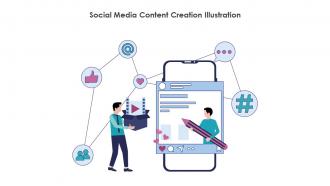
Understand how pull requests enhance collaboration (facilitate code reviews), and maintain a clean and efficient development workflow. This tutorial for beginners illustrates the workings of Git version control and its importance for data science projects. Explore the GitHub tools designed to streamline development processes and boost productivity. Learn the distinctions between Git and GitHub, their collaborative roles in contemporary workflows, and the appropriate contexts for using each in individual and team projects.